



MX (Mail Exchange) DNS Record

What is an MX (Mail Exchange) Record?
An MX (Mail Exchange) record is a type of DNS record that specifies which mail servers are responsible for receiving emails for a domain. It directs incoming email traffic to the correct email server.
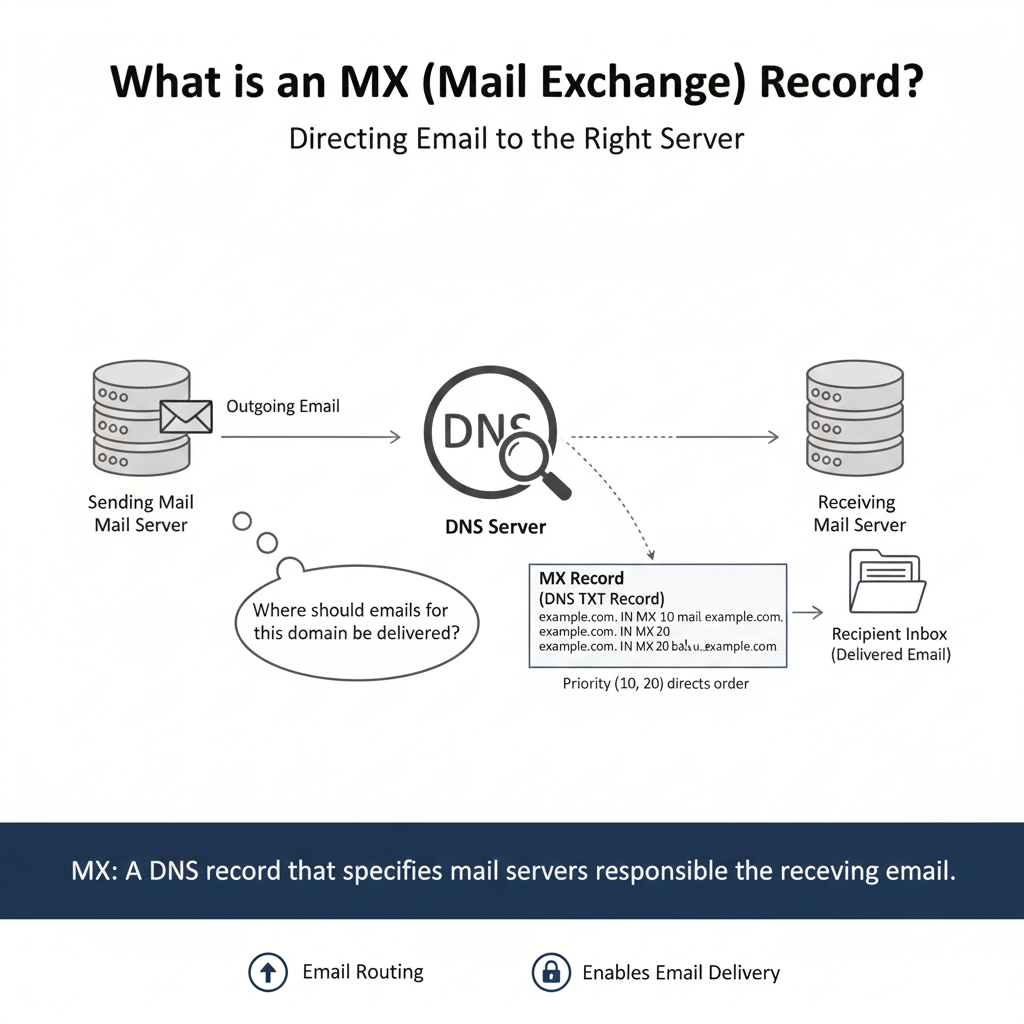
In simple terms, MX records answer the question:
“Where should emails for this domain be delivered?”
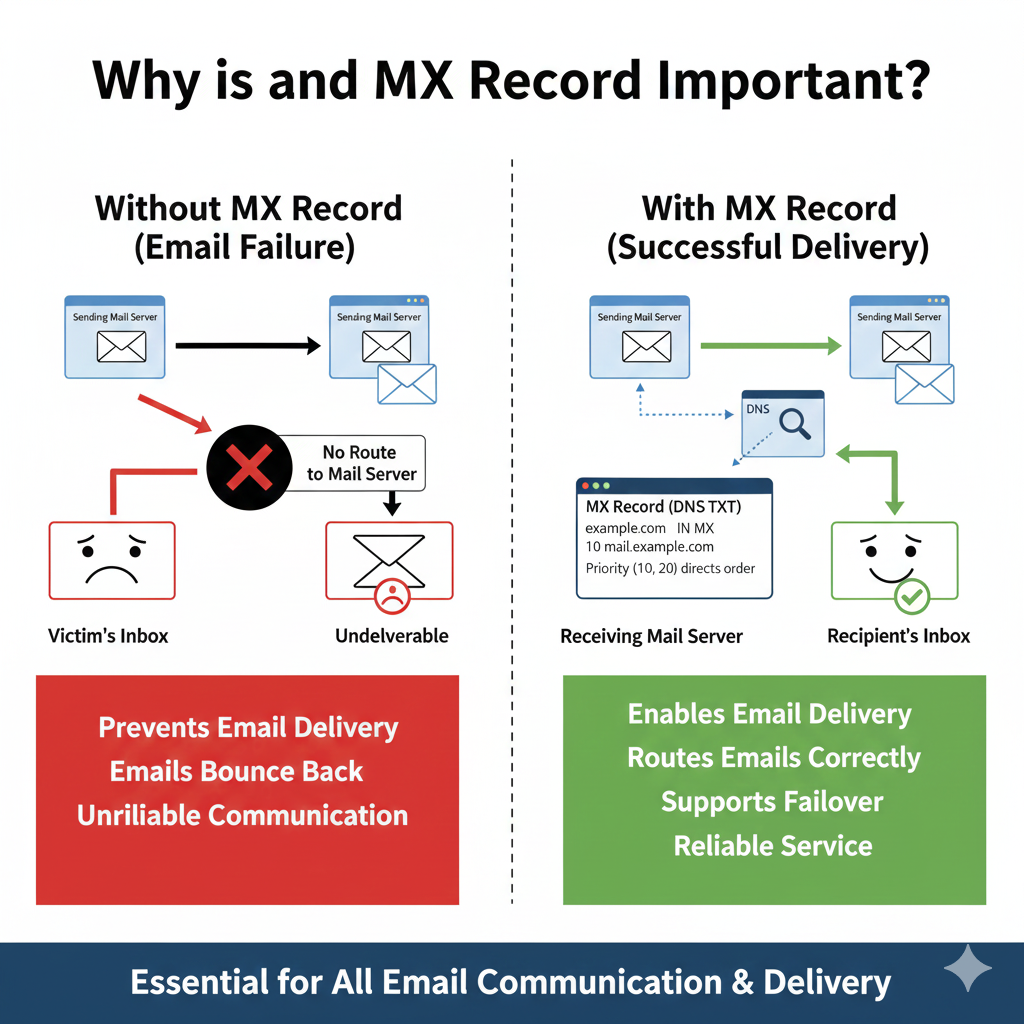
Without a valid MX record, a domain cannot receive emails.
Why is an MX Record Important?
MX records are essential for the basic functioning of email communication. They ensure that emails sent to a domain reach the correct destination mail server.
Key Reasons to Use MX Records:
- Enables email delivery for a domain
- Routes emails to the correct mail server
- Supports backup and failover mail servers
- Works with SPF, DKIM, and DMARC
- Helps maintain reliable and continuous email service
How Does an MX Record Work?
When someone sends an email to user@yourdomain.com, the sending mail server:
- Queries DNS for the domain’s MX records
- Identifies the mail server with the lowest priority number
- Connects to that mail server using SMTP
- Delivers the email to the recipient’s mailbox
If the primary mail server is unavailable, the sender tries the next MX record based on priority.
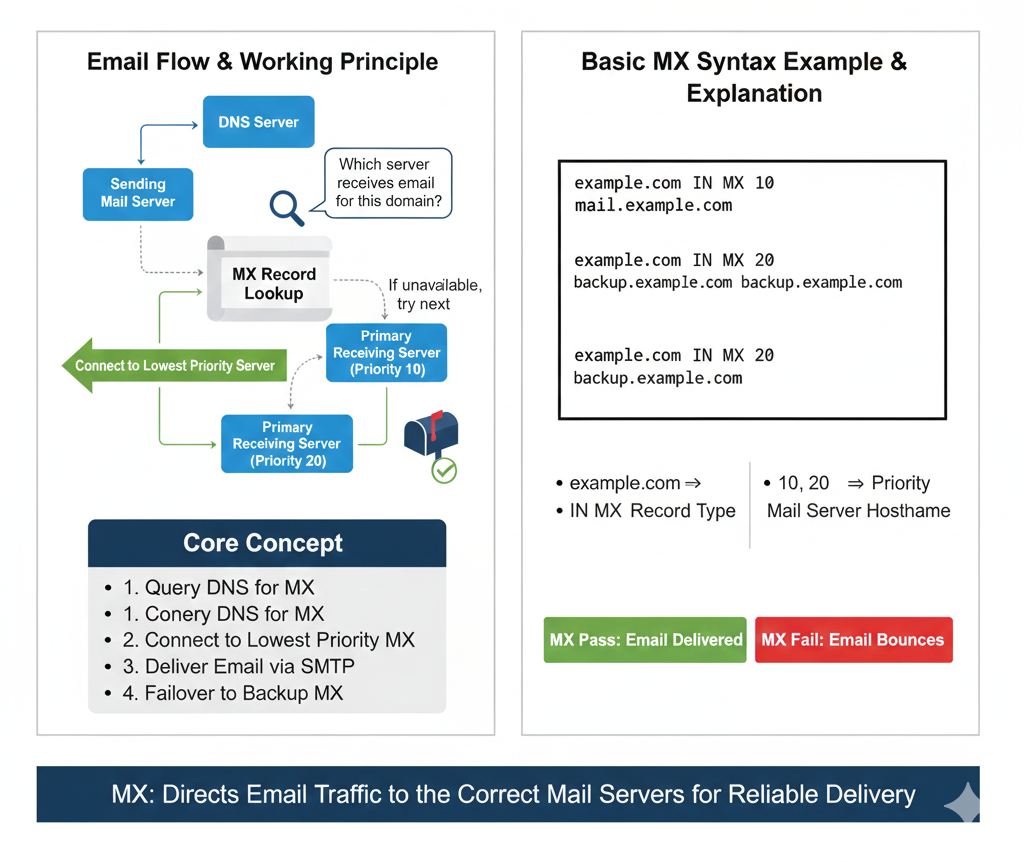
Principle of MX Record (Working Principle)
MX records operate on the principle of priority-based mail routing.
Core Concepts:
- Each MX record has a priority value
- Lower numbers indicate higher priority
- Multiple MX records allow redundancy and failover
- Mail servers attempt delivery in priority order
Example MX Record:
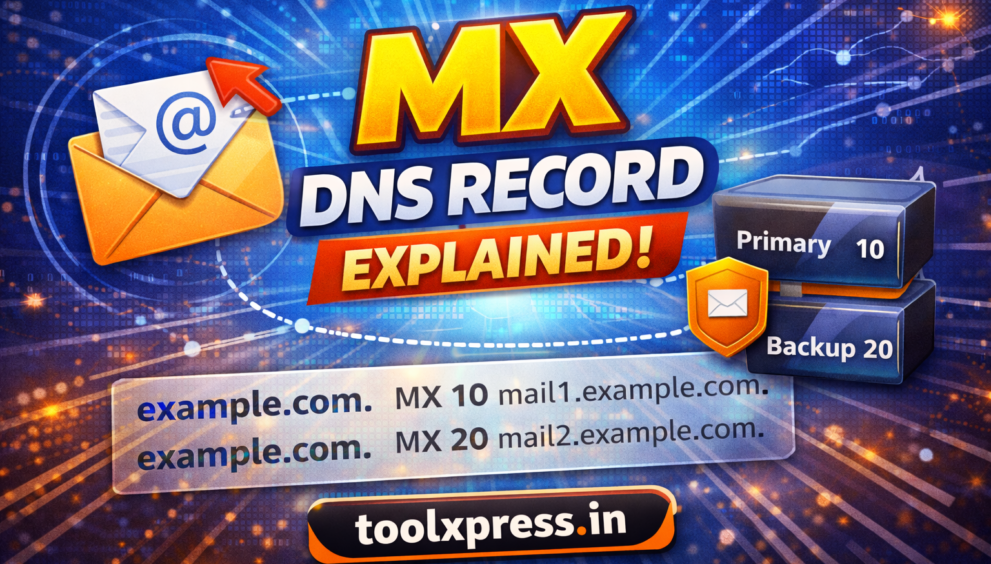
example.com.    MX 10 mail1.example.com.
example.com.    MX 20 mail2.example.com.
Explanation:
mail1.example.com→ Primary mail servermail2.example.com→ Backup mail server10and20→ Priority values
MX Record Priority Explained
| Priority | Purpose |
|---|---|
| Lowest number | Primary mail server |
| Higher number | Secondary / backup server |
| Same priority | Load balancing (round-robin) |
Pros of MX Record
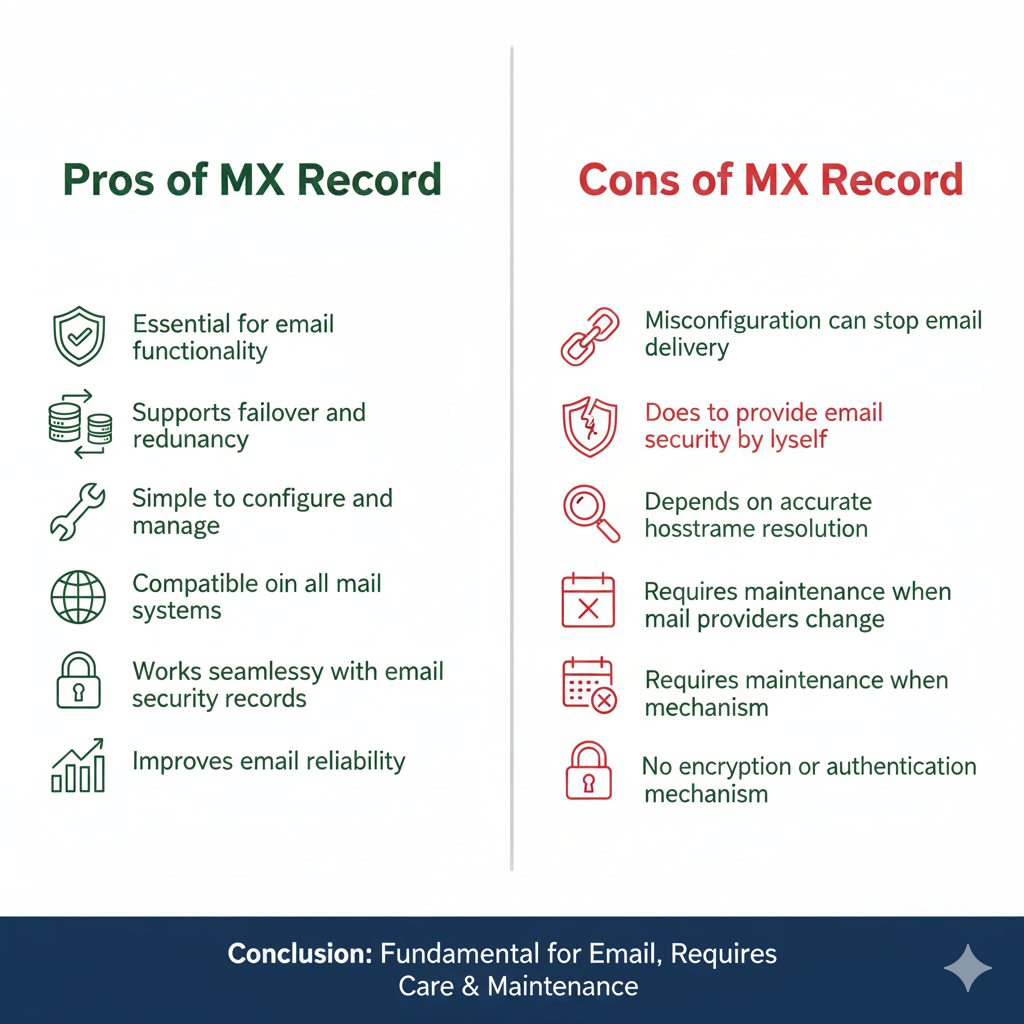
- Essential for email functionality
- Supports failover and redundancy
- Simple to configure and manage
- Compatible with all mail systems
- Works seamlessly with email security records
- Improves email reliability
Cons of MX Record
- Misconfiguration can stop email delivery
- Does not provide email security by itself
- Depends on accurate hostname resolution
- Requires maintenance when mail providers change
- No encryption or authentication mechanism